

What Does a Clean Title Mean? Complete Guide to Vehicle Titles
Discover what a clean title means, how to transfer vehicle titles traditionally, and explore J.G. Title Company's streamlined online title transfer service.
Introduction
If you’re buying or selling a vehicle, you’ve likely heard the term “clean title” tossed around. But what does a clean title mean exactly? Understanding this term is crucial because it affects your vehicle’s value, legal ownership, and your ability to register or resell the vehicle.
In this comprehensive guide, we’ll explain what a clean title means, how it differs from other types of titles, and walk you through the traditional process of transferring a vehicle title. Plus, we’ll introduce you to a modern alternative—J.G. Title Company’s mostly online platform that simplifies title transfers and registration, helping you avoid long DMV wait times and paperwork confusion.
What Does a Clean Title Mean?
A clean title is a vehicle title that indicates the car has never been significantly damaged or declared a total loss by an insurance company. It means the vehicle has a clear ownership history without any major issues such as:
Salvage or rebuilt status
Flood damage
Theft recovery
Major accident write-offs
Why Is a Clean Title Important?
Resale Value: Vehicles with clean titles generally command higher prices because buyers trust the car’s history.
Financing & Insurance: Lenders and insurers prefer clean titles as they indicate less risk.
Legal Ownership: A clean title confirms the seller has full legal ownership, making the transfer process smoother.
How to Check If a Title Is Clean
You can verify a vehicle’s title status by:
Requesting a vehicle history report (e.g., Carfax, AutoCheck)
Checking with your state’s DMV or title agency
Using online title check services
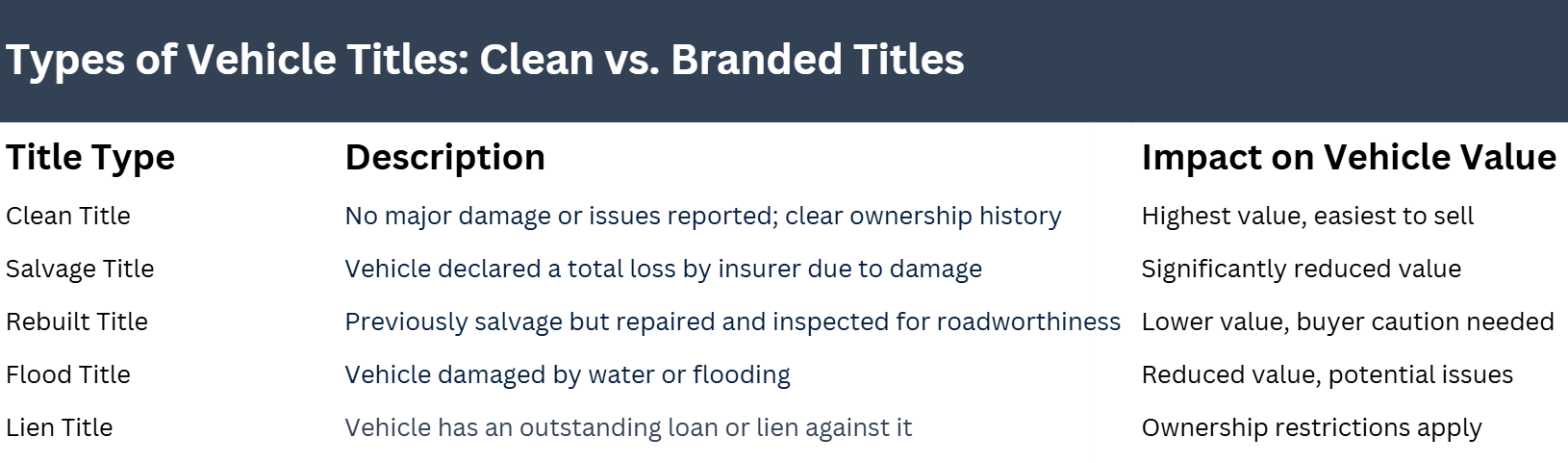
Types of Vehicle Titles: Clean vs. Branded Titles
Understanding the different types of titles helps clarify what a clean title means in context.
Traditional Process: How to Transfer a Vehicle Title
Transferring a vehicle title the traditional way can be complex and varies by state and county. Here’s a general step-by-step overview:
Step 1: Verify Ownership and Title Status
Ensure the seller has a clean title in hand.
Confirm there are no liens or outstanding loans on the vehicle.
Step 2: Complete the Title Transfer Form
Both buyer and seller must fill out the title transfer section on the back of the title certificate.
Some states require additional forms, such as a bill of sale or odometer disclosure statement.
Step 3: Submit Required Documents to DMV
Submit the signed title, transfer forms, proof of identity, and payment for title transfer fees to your local DMV or motor vehicle agency.
Some states require notarization of signatures.
Step 4: Pay Fees and Taxes
Pay applicable title transfer fees, sales tax, and registration fees.
Fees vary widely by state and vehicle type.
Step 5: Receive New Title and Registration
The DMV processes the transfer and issues a new title in the buyer’s name.
Registration and license plates may be issued simultaneously or separately.
Challenges of the Traditional Title Transfer Process
Time-consuming: DMV visits often involve long wait times.
Complex paperwork: Multiple forms and state-specific requirements can confuse buyers and sellers.
Risk of errors: Mistakes on forms can delay processing or cause legal issues.
Inconsistent timelines: Processing times vary from a few days to several weeks depending on the state or county.
J.G. Title Company’s Streamlined Online Title Transfer Solution
To address these challenges, J.G. Title Company offers a mostly online platform that simplifies title transfers and vehicle registration nationwide, including all 50 states and Tribal Lands.
How Our Platform Works
Online submission: Upload your documents securely from home or office.
Expert processing: Our trained staff handles the paperwork and DMV interactions for you.
Fast turnaround: Depending on your state, title processing can take as little as 2 days to 3 weeks.
Nationwide coverage: We support out-of-state transactions and complex lien filings.
Benefits of Using J.G. Title Company
Avoid long DMV lines and confusing paperwork.
Reduce errors with expert document auditing.
Save time and effort with a trusted third-party service.
Access transparent pricing and tax quotes upfront.
State-Specific Considerations for Title Transfers
Because vehicle title laws differ by state, it’s important to understand local requirements:
Some states require notarized signatures on title transfers.
Certain states mandate emissions or safety inspections before transfer.
Fees and taxes vary widely and may include county-specific surcharges.
Online title transfer availability differs by jurisdiction.
Tip: Always check your state DMV website or consult with J.G. Title Company experts to ensure compliance.
Frequently Asked Questions (FAQs)
1. Can I transfer a vehicle title without a clean title?
No. A clean title or an acceptable branded title is required to legally transfer ownership. If the title is lost or damaged, you must apply for a replacement before transferring.
2. How long does it take to get a new title after transfer?
Processing times vary by state but typically range from 2 days to 3 weeks. Using a service like J.G. Title Company can help expedite this process.
3. What documents do I need to transfer a vehicle title?
You generally need the signed title, a bill of sale, proof of identity, and payment for fees. Some states require additional forms or notarization.
4. Is it possible to transfer a title online?
Yes, some states allow online title transfers. J.G. Title Company offers a mostly online service that handles the process for you nationwide.
5. What happens if I buy a car without a title?
Buying a car without a title is risky. You may not be able to register or resell the vehicle. It’s best to obtain a title before completing the purchase.
Conclusion
Understanding what does a clean title mean is essential for anyone involved in buying, selling, or transferring vehicle ownership. A clean title ensures clear ownership and protects your investment. While the traditional title transfer process can be complicated and time-consuming, J.G. Title Company offers a modern, mostly online alternative that saves you time, reduces errors, and simplifies compliance across all 50 states.
Ready to skip the DMV hassle? Visit J.G. Title Company today to start your streamlined vehicle title transfer and registration process.